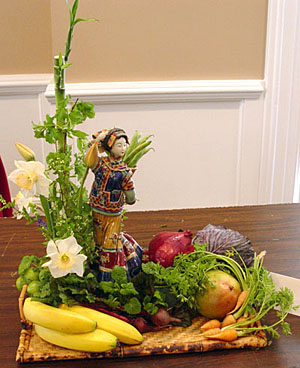
Basic Design "At Home With Flowers"
UNIT 4 Fruits & Vegetables class notes, page 3

|
Basic Design "At Home With Flowers" UNIT 4 Fruits & Vegetables class notes, page 3 |
|
|
|
VII. Helpful Hints
|
|
|
Planned simplicity is the aim of the designer.
Texture is important in relating the plant material to the container. It helps determine the style of the design - formal or casual. It furnishes accent or contrast. The skin determines the textural characteristics - shiny, downy, nubby, crisp, rough, etc. The design can be dull unless it has strong textural contrasts. |
Depth Overlapping leaves, some objects partially hidden, nuts, fruits, gently curving, tendrils are some components to help achieve depth. Dark and light values help achieve depth. To secure Harmony and Rhythm, regulate color pattern carefully. Avoid spottiness. Repetition of the general color scheme is essential for rhythm. Hues should be varied but compatible.
|
|
|
Return to Basic Design Home Page |
||