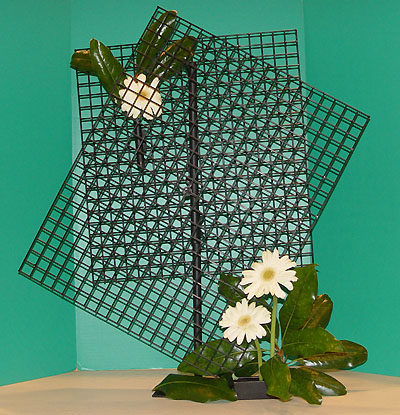
This is a creative design which
includes see-through element/s which permit some components to be viewed
through others.
You can use
-
transparent natural
materials including:
skeletonized foliage, branches, sea fans, open weave grasses, gypsophilia,
-
transparent man-made materials:
acrylic, glass, mesh, screening, open-weave fabric, grillwork,
etc
In addition to transparent materials, translucent,
diaphanous, and grid-like materials are also acceptable.
1. Planes and forms are
juxtaposed by overlapping, giving a three dimensional effect of depth
and space.
2. By
positioning solid forms in front of and behind transparent ones an increased
awareness of depth is realized.
3. Added lighting, including underlighting, may give a more transparent effect.
4. Back
lighting and special spot lighting may also enhance the effect of a
transparency.
|
Staging:
1. Floor design
2. Hanging design
3. Combined with other design types
4. Niche
5. Pedestal
6. Lighted from underneath or behind a panel
|
Go to this
link
to see transparencies created in a previous class.

click to enlarge |
Suggestions:
1. Keep in mind that this is a Transparency design and a Creative
design.
Must be creative using original components or components used
in an unusual way. Go beyond the norm and try something new!
2. A Transparency design means the transparency must be dominant. When
you look at this design, the transparency must stand out.
3. Keep in mind the scale of the transparency which can be dominant but
then may be out of scale with the other components in the design.
4. Avoid using water as the transparency making it an underwater
design.
|
Principles of Design
Balance
Rhythm
Dominance
Contrast
Proportion
Scale
Elements of Design
Line
Color
Light
Texture
Pattern
Form
Size
Space
Return to Basic Design Home Page

|