Basic Design "At Home With Flowers"

UNIT 4   Fruits & Vegetables     class notes, page 2

Oranges, lemons, yellow bananas and grapefruit may be difficult to use because of their bold colors.  Leafy materials wilt easily at room temperatures.  Plums, peaches, strawberries, cherries and tomatoes are hard to wire and mash easily.


Needlepoint holder


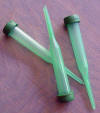
orchid or water tubes


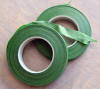
stem wrap


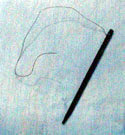
wired pick

IV. Condition
  • select those in top condition, slightly under ripe
  • dust free
  • the "bloom" is usually attractive (ie. the greyish coating seen on grapes, plums)
  • wash, wipe clean and buff with a soft cloth
  • do not use oil or polish

V. Containers

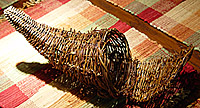
  • Footed compotes, reed mats, wooden slabs, crocks, basin, trays, casseroles, celery and vegetable dishes, baskets, cornucopias, scales, ornamental boxes.
  • Choose what is appropriate for the location in which it is to be placed and for the type of materials you will be putting into it.


MECHANICS - What to Bring

  1. Chicken wire, needlepoint holder
  2. Florist picks, bamboo skewers, stakes with V at one end, strong toothpicks, dowels.                              

               a. Useful for holding fruit in position. Press half of a skewer into one piece of fruit and half into another.  Push the fruit together.  It is not harmed as it is by using wire that may rust.

              b. Heavy fruit such as pineapple may be held in place by 2 or 3 pieces of dowel stuck into its base and then into floral foam or a needlepoint.

   3.    Ice pick
   4.    Pliers
   5.    Wire
   6.    Orchid tubes
       tape onto longer sticks and use to position flowers or foliage higher up in the design when stem is too short. Easily filled with water while in design by using a syringe.
   7.    Small containers to hold water for flowers or foliage.
   8.    Stem wrap for bunching small fruits or nuts
   9.    Floral wire for bunching

Return to Basic Design Home Page           See photos of the 2005 Fruits/Vegetables class
Return to Froghaven
Return to Sope Creek Garden Club
              Go to Unit 4  page 3